When product leaders plan a branded crypto wallet, the first architectural debate is almost always the same: should we ship a cloud-sharded MPC wallet, or a sovereign non-custodial HD wallet powered by BIP-39/BIP-44 and C++ WalletCore?
Both models have legitimate use cases, but choosing the wrong one can lock your business into permanent per-MAU vendor taxes, regulatory custody gray zones, or friction when crypto-native users try to migrate their existing wallets.
Head-to-Head Architectural Comparison
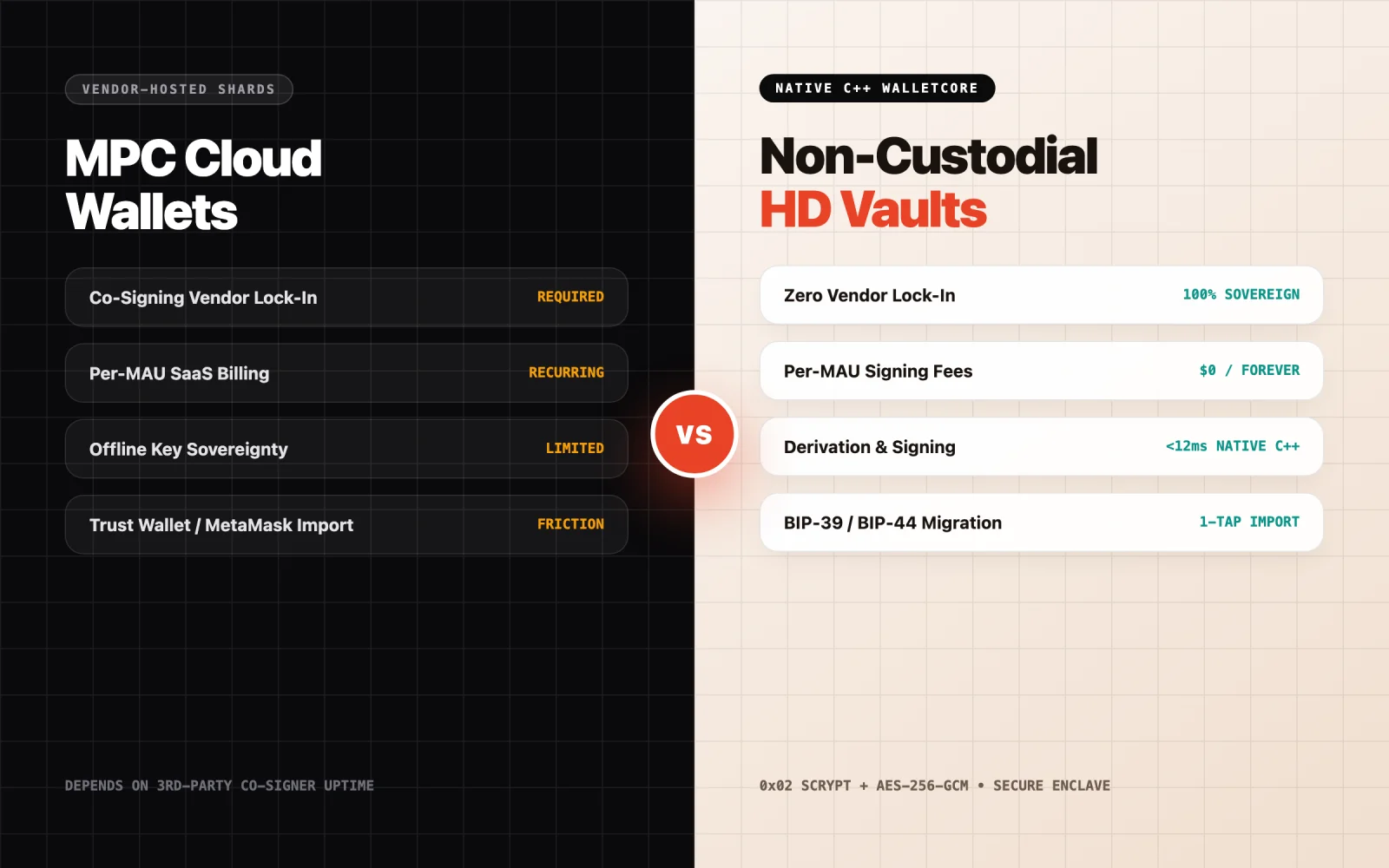
| Dimension | SaaS MPC Cloud Wallets | Native C++ HD Vault (G-Wallet) |
|---|---|---|
| Vendor Dependency | Requires third-party co-signer uptime for every signature | Zero vendor lock-in — 100% sovereign on device |
| Unit Cost at Scale (100K+ MAU) | Recurring per-MAU / per-signature SaaS fees | $0 per-MAU signing cost forever |
| Existing Wallet Migration | Cannot natively import MetaMask / Trust Wallet / Phantom seed phrases cleanly | 1-tap BIP-39 / BIP-44 import across 32+ chains |
| Regulatory Custody Posture | Shared key control can trigger VASP / custodian scrutiny in strict jurisdictions | Pure self-custody — keys never leave user hardware |
| Signing Latency | Network round-trips to MPC co-signing nodes (300ms–1,500ms) | <12ms local C++ WalletCore derivation & signing |
When MPC Makes Sense vs. When Native HD Wins
- Choose MPC if you are building a Web2 consumer game or loyalty app where users never interact with external DeFi protocols, never migrate from MetaMask/Phantom, and accept permanent SaaS co-signer dependency.
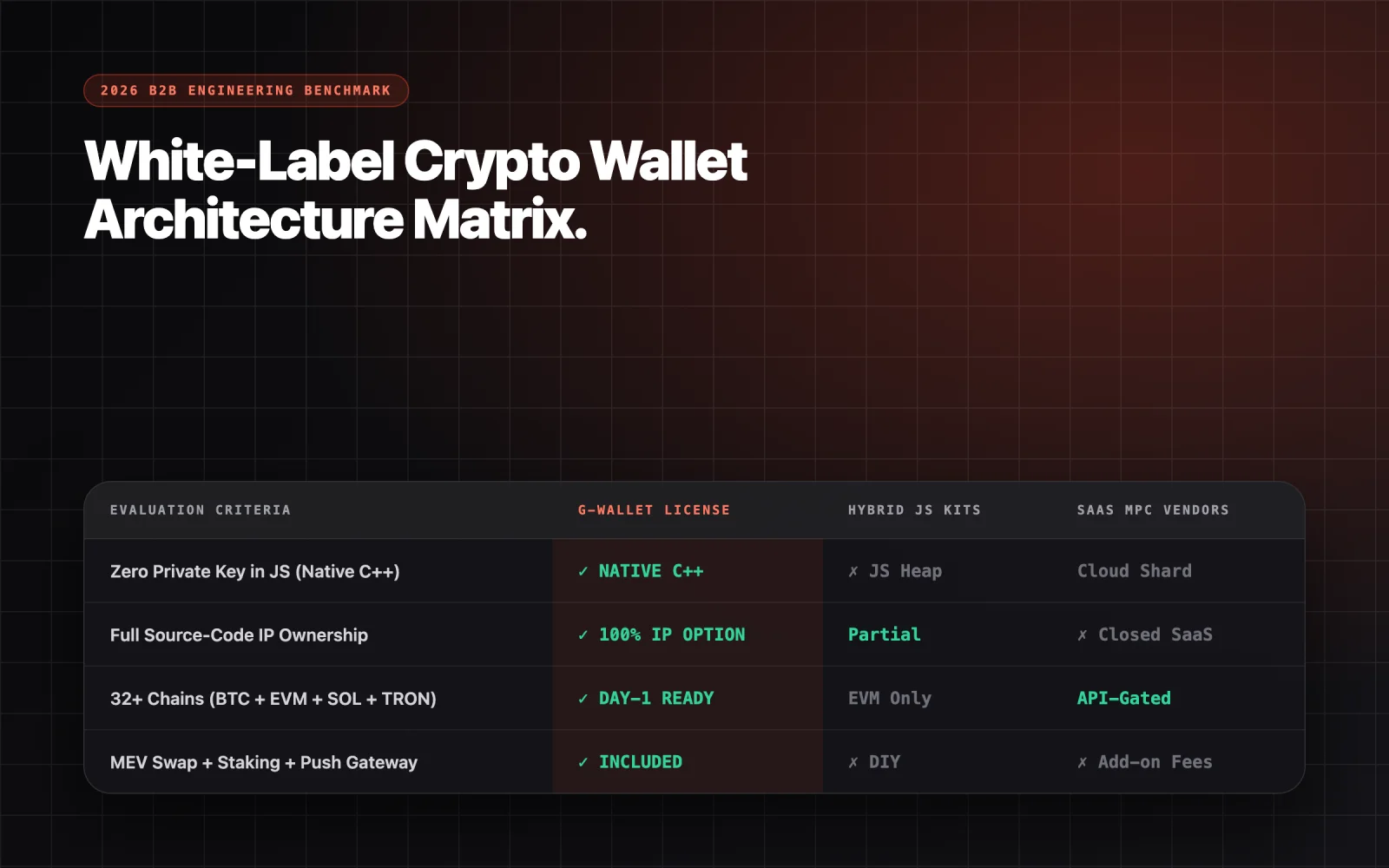
- Choose a Native C++ HD Vault if you are an exchange, payment gateway, DeFi protocol, or fintech serving crypto-active users who demand true self-custody, instant seed-phrase portability, multi-chain coverage (BTC, EVM, Solana, TRON, TON, Move), and predictable zero-per-MAU economics.
How G-Wallet Hardens HD Self-Custody for Modern Mobile Users
Traditional HD wallets got a bad reputation because early hybrid apps stored seed phrases loosely in JavaScript memory. G-Wallet eliminates that risk by isolating every cryptographic operation inside native C++ TrustWallet Core TurboModules, wrapping the 0x02 SCrypt + AES-256-GCM vault inside iOS Secure Enclave & Android KeyStore, and wiping signing buffers immediately with memset_s.
Read the full cryptographic deep dive in Zero Private Key in JavaScript, or compare TCO in our 2026 Build vs. License Cost Breakdown.
License the complete iOS, Android & Gateway stack.
Turn-Key White-Label deployment or Full Source-Code IP ownership.