Every crypto exchange, neobank, Layer-1/Layer-2 ecosystem, and Web3 payment platform eventually hits the same strategic fork in the road: should we build a non-custodial mobile wallet from scratch, or license a production-ready white-label crypto wallet engine?
On paper, assembling a basic React Native or Flutter wallet with an open-source JavaScript library looks deceptively fast. In production, shipping an institutional-grade iOS and Android wallet that passes third-party security audits, survives App Store review, supports 30+ blockchains, and handles real-time swaps and staking is a completely different engineering discipline.
The Real Cost of Building a Multi-Chain Wallet In-House
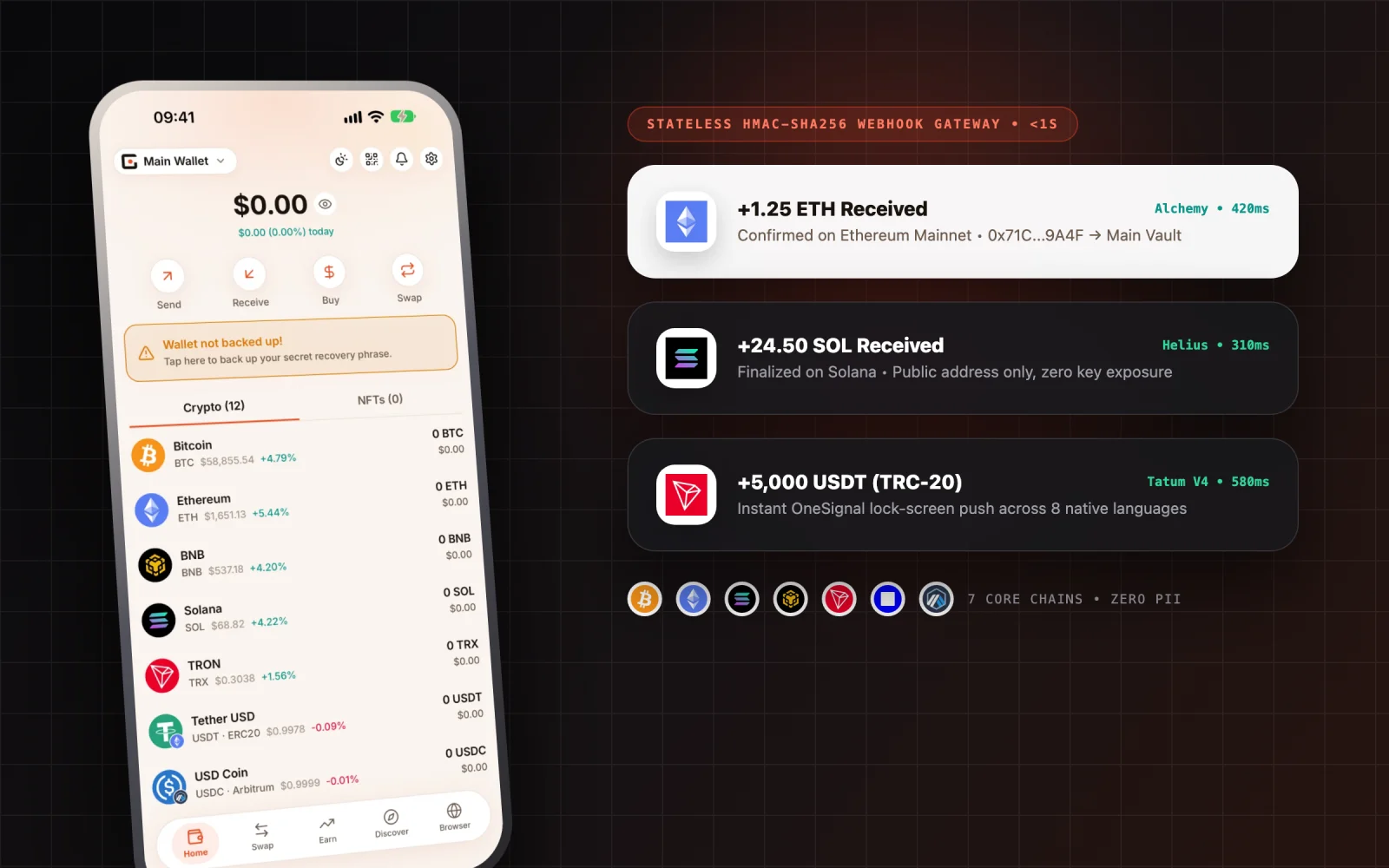
A production multi-chain wallet is not a single mobile app—it is a coordinated stack of native cryptographic bridges, hardware enclave storage, chain-specific transaction builders (UTXO, EVM, Solana, TRON, Move, Cosmos), DEX/bridge aggregators, and a real-time indexing and push-notification backend.
| Workstream | In-House Build From Scratch | G-Wallet White-Label / Source License |
|---|---|---|
| Time to App Store & Play Store | 9 – 14 months | 2 – 4 weeks |
| Core Engineering Team Needed | 6–8 engineers (iOS, Android, C++/Crypto, Backend, QA) | 1–2 engineers (or Turn-Key by Gióng Studio) |
| Year-1 Engineering + Audit Cost | $480,000 – $950,000+ | Fraction of in-house build (fixed license) |
| Security Architecture | Often falls back to JS-heap key decryption | Zero Private Key in JS (Native C++ WalletCore) |
| Monetization Readiness | Months of aggregator & on-ramp integration | Day-1 Swap fees, Staking, Fiat On/Off-Ramp |
4 Hidden Costs Teams Underestimate When Building From Scratch
- Native Cryptography & Audit Remediation: Storing mnemonics in JavaScript memory (Hermes/V8) or AsyncStorage routinely triggers High/Critical findings during penetration tests. Re-architecting into native Swift/Kotlin + C++ TurboModules mid-project adds 3–5 months.
- Chain Maintenance Drift: Solana priority fees, Ethereum EIP-1559/4844 updates, TRON Stake 2.0 energy mechanics, and Bitcoin UTXO coin selection evolve continuously. Maintaining 32+ chains is a permanent engineering tax.
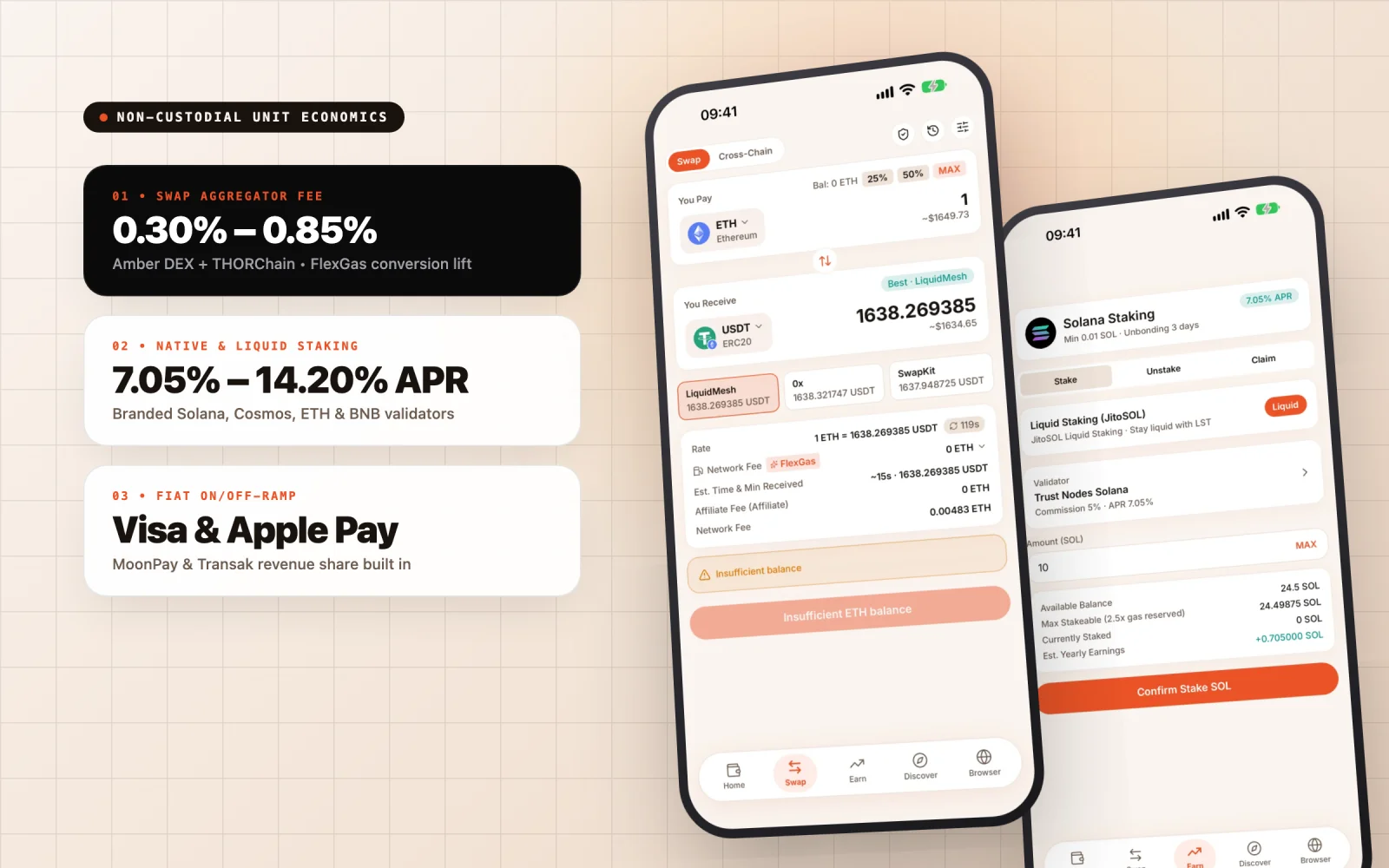
- MEV & Cross-Chain Swap Routing: Integrating single-chain DEX aggregators alongside native cross-chain bridges (such as THORChain), gasless FlexGas flows, and ERC-20 approval revokers requires dedicated DeFi backend engineering.
- App Store & Google Play Rejections: First-time Web3 wallet submissions frequently stall in review over Web3 dApp browser policies, biometric fallback flows, and fiat on-ramp disclosures.
When to Choose Turn-Key White-Label vs. Full Source-Code License
Not every organization needs the same engagement model. At Gióng Studio, teams licensing G-Wallet White-Label Crypto Wallet typically choose between two proven tracks:
- Turn-Key White-Label Deployment (2–4 weeks): Ideal for exchanges, fintechs, and token ecosystems that want to ship fast under their own brand identity, domain, App Store/Play Store accounts, and custom swap fee configuration.
- Full Source-Code License (100% IP Sovereignty): Ideal for regulated enterprises and well-funded protocols with internal mobile teams who want complete ownership of the React Native 0.88 + C++ WalletCore repository, Domain-Driven Design (DDD) modules, and Next.js 16 gateway.
Ready to Benchmark Against Your Roadmap?
Explore the live architecture, real iOS screens, and licensing options on the G-Wallet White-Label product page, or read our engineering deep dive on Zero Private Key in JavaScript architecture.
License the complete iOS, Android & Gateway stack.
Turn-Key White-Label deployment or Full Source-Code IP ownership.